The Complete Guide to Housekeeping Carts: How to Stock, Organize, and Maintain Them Properly
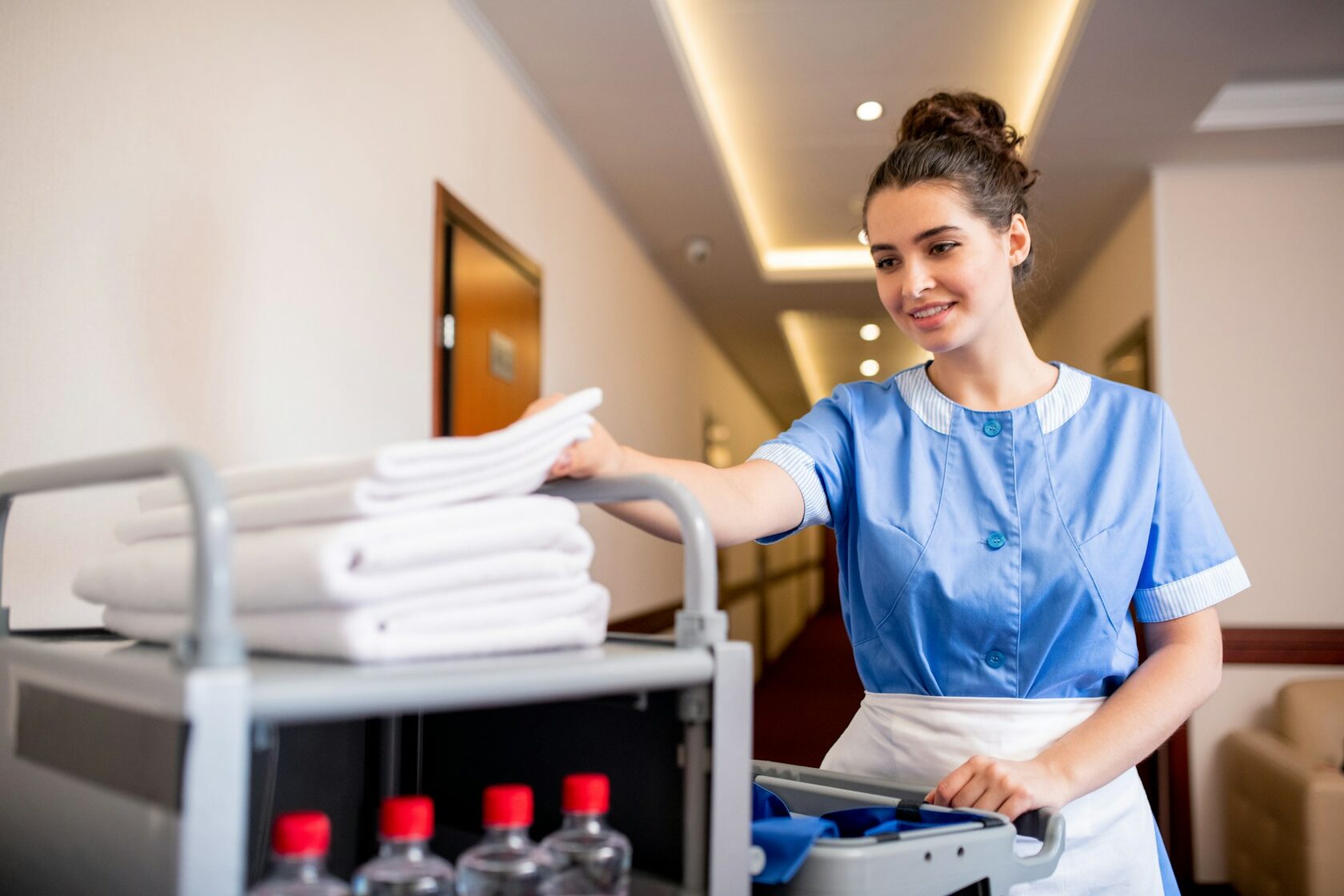
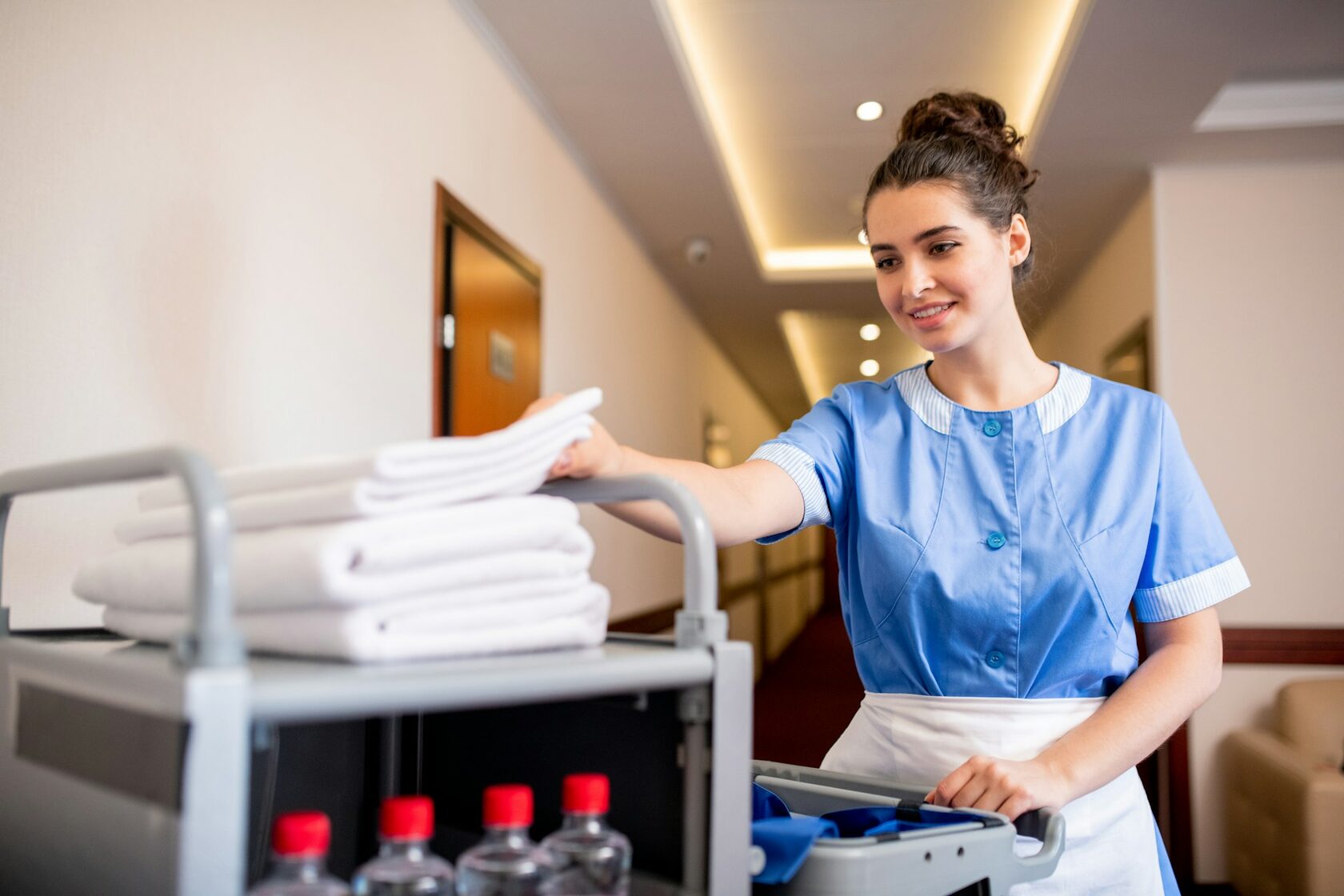
A housekeeping cart isn't just a piece of equipment. It's a mobile workstation. How it's stocked, organized, and maintained directly affects how fast your team cleans, how professional your hallways look, and how guests perceive your hotel before they even enter their room.
A messy cart with dirty linen spilling over guest amenities sends one message: this hotel doesn't care about details. A well-organized cart sends the opposite. Here's everything you need to know about getting it right.
A messy cart with dirty linen spilling over guest amenities sends one message: this hotel doesn't care about details. A well-organized cart sends the opposite. Here's everything you need to know about getting it right.
Types of Housekeeping Carts
There are four main types, each designed for a specific function.
Universal carts. The all-in-one workstation for guest room cleaning. Contains everything an attendant needs: linen, amenities, cleaning supplies, and waste collection. This is the most common type and the focus of this guide.
Public area carts. Equipped with telescopic mops, microfiber cloths, one or two mop buckets with wringers, cleaning chemicals, brushes for grout and toilets, a duster, trash bags, dustpan, and a side-mounted waste bag. Designed for lobbies, corridors, and shared spaces.
Linen collection carts. Simple carts placed on each floor during room turnover to collect dirty linen. Also used in laundry operations.
Pre-prepared mopping carts. Fitted with containers for pre-soaked mops and cloths. These eliminate the need for attendants to rinse and wring mops in front of guests — keeping the wet cleaning process discreet and professional.
How to choose: Consider your building layout, number of floors, room count, elevator size, corridor width, and how many attendants work simultaneously. A boutique hotel with 20 rooms needs a different setup than a 200-room resort.
For properties with villas, cottages, or townhouses spread across grounds — standard carts often don't work at all. Some properties use cargo tricycles with supply boxes. Others keep cleaning supplies in storage closets inside each building and use smaller, portable caddies for transport. In snowy climates, some operations even use purpose-built sleds. The principle is always the same: get supplies to the room with minimum wasted movement.
Pre-prepared mopping carts. Fitted with containers for pre-soaked mops and cloths. These eliminate the need for attendants to rinse and wring mops in front of guests — keeping the wet cleaning process discreet and professional.
How to choose: Consider your building layout, number of floors, room count, elevator size, corridor width, and how many attendants work simultaneously. A boutique hotel with 20 rooms needs a different setup than a 200-room resort.
For properties with villas, cottages, or townhouses spread across grounds — standard carts often don't work at all. Some properties use cargo tricycles with supply boxes. Others keep cleaning supplies in storage closets inside each building and use smaller, portable caddies for transport. In snowy climates, some operations even use purpose-built sleds. The principle is always the same: get supplies to the room with minimum wasted movement.
What Goes on a Universal Cart: The Complete Checklist
A universal cart should contain everything an attendant needs for a full shift of room cleaning. There's no single global standard — your head of housekeeping should create one specific to your property, with written descriptions and photos.
Cleaning equipment:
- Mop with interchangeable heads and a bucket — or a mop with pre-prepared pads for bucket-free cleaning
- Cleaning, sanitizing, and disinfecting solutions in spray bottles — organized in a caddy or bucket
- Reusable rubber gloves or disposable vinyl gloves
- Microfiber dusting cloths, a duster on an extendable handle, a toilet brush with handle
- Color-coded sponges: soft sponges (blue or white base) for sinks, bathtubs, and shower screens — firm enough to clean but gentle on surfaces; a separate red sponge exclusively for toilets. Each stored in its own bag.
- Vacuum cleaner (if rooms have carpeted floors)
Linen and textiles:
Guest amenities:
- Bed sheets, duvet covers, pillowcases
- Bath towels, hand towels, floor mats
- Robes and slippers
Guest amenities:
- Toilet paper, facial tissues, soap
- Shampoo, conditioner, shower gel, body lotion — in dispensers (300–500ml) or individual packaging (20–50ml)
- Shower caps, dental kits, vanity kits
- Laundry bags and waste bin liners (120L)
- Water bottles (typically 0.5L)
- Tea bags, coffee sachets, sugar, creamer
- Clean glasses, cups, spoons, napkins
Printed materials:
- Guest directories, breakfast menus, laundry slips, notepads, pens
- Store paper items in folders to keep them clean and flat
How to Load a Universal Cart
A properly loaded cart has a clear structure. Everything has a designated place — and guests passing by in the hallway should never see anything that makes them question your hygiene standards.
Top open shelf (with a cover or lid): Toilet paper, guest cosmetics and amenities, water bottles, tea and coffee supplies, spare glasses and cups, pens, and a rack for printed materials (laundry slips, menus, brochures, notepads).
First enclosed shelf (top): Hand towels and pillowcases.
Second enclosed shelf (middle): Bath towels, floor mats, and flat sheets.
Third enclosed shelf (bottom): Robes and duvet covers.
All enclosed shelves should have fabric curtains or blinds on the front to protect clean linen from dust. The top shelf should always have a cover or cloth draped over it.
Side bags:
Some carts have internal pockets attached to the bag frames — useful for storing slippers, dry cloths, and small items that don't fit on the top shelf.
Cleaning caddy: Place the caddy with chemicals, gloves, sponges, and cloths on the shelf under one of the side bags (usually under the linen bag), or on top of the waste bag lid while transporting the cart. The vacuum typically sits on the shelf under the waste bag.
Pro tip: If your property uses separate linen collection carts on each floor, you can replace the dirty linen bag with a mop bucket or vacuum — giving the attendant more accessible tools on the cart itself.
- Right side: dirty linen bag
- Left side: waste bag — must have a lid. Line it with a heavy-duty 120L plastic bag to keep the fabric bag clean.
Some carts have internal pockets attached to the bag frames — useful for storing slippers, dry cloths, and small items that don't fit on the top shelf.
Cleaning caddy: Place the caddy with chemicals, gloves, sponges, and cloths on the shelf under one of the side bags (usually under the linen bag), or on top of the waste bag lid while transporting the cart. The vacuum typically sits on the shelf under the waste bag.
Pro tip: If your property uses separate linen collection carts on each floor, you can replace the dirty linen bag with a mop bucket or vacuum — giving the attendant more accessible tools on the cart itself.
Daily Cart Routine for Attendants
Start of shift:
- Wipe down and disinfect all cart surfaces — shelves, handles, frames
- Stock the cart according to the approved standard
- Check wheel condition — all four should spin freely on both hard floors and carpet
End of shift:
- Remove all remaining linen and supplies
- Wipe all surfaces with cleaning solution
- Disinfect with approved sanitizer
- Replace any soiled fabric bags with clean ones — send dirty bags to laundry
Handling the cart: A fully loaded universal cart weighs 60–80 kg (130–175 lbs). It takes practice to maneuver — especially around corners and through doorways. Every new hire should be trained on how to steer the cart properly and how to check wheels for damage or resistance.
If a wheel sticks, a handle bends, or any part of the cart is damaged — submit a maintenance request immediately. Never push through a shift with broken equipment.
If a wheel sticks, a handle bends, or any part of the cart is damaged — submit a maintenance request immediately. Never push through a shift with broken equipment.
Management Tips: Keeping Standards High
Create a cart standard document. Write clear guidelines for your team: what goes where, how to load, how to maintain. Include photos of a correctly stocked cart. Make it part of your onboarding package.
Score cart appearance during inspections. When doing floor rounds, rate each cart's appearance on the attendant's daily worksheet. If the score is low, address it with a quick conversation at the end of the shift — and revisit the topic at the next morning briefing.
Inspect randomly, not on a schedule. If attendants know you check carts every Wednesday, they'll only keep them tidy on Wednesdays. Random checks keep standards consistent.
Manage linen overflow during peak days. When checkout volume is high, dirty linen bags fill up fast — and start spilling onto clean supplies. Two solutions:
- Ask laundry staff to collect dirty linen from carts on every floor every 90 minutes
- Place extra linen collection carts in the corridor so attendants can offload dirty linen without returning to the storage room
This keeps hallways presentable and gives attendants room to work.
Recognize good cart management. Take photos of well-maintained carts during shifts and share them with the team. Recognize attendants who consistently keep their carts organized. It reinforces that cart standards aren't optional — they're part of the job.
A guest walking past a cart with dirty linen touching toilet paper and amenity bottles will assume the products in their room were contaminated too. That one moment — three seconds in a hallway — can shape their entire perception of your hotel.
The cart is more than a tool. It's a statement about your standards.
A guest walking past a cart with dirty linen touching toilet paper and amenity bottles will assume the products in their room were contaminated too. That one moment — three seconds in a hallway — can shape their entire perception of your hotel.
The cart is more than a tool. It's a statement about your standards.